
|
Ever wondered why windshield replacements can range from "that's reasonable" to "how much?!" It often comes down to whether you're getting OEM or aftermarket auto glass. OEM (Original Equipment Manufacturer) auto glass means it's essentially the same piece your car manufacturer trusts and uses. It's not just about seeing through a clear lens; it's about safety, quality, and maintaining your car's integrity. Today, we'll dive into why knowing the difference matters and how it can save you more than just money in the long run.
Understanding OEM Auto Glass The Manufacturing Process OEM auto glass goes through stringent manufacturing processes, mirroring the quality and specifications of the glass initially installed in your vehicle. Here’s what sets it apart:
OEM auto glass stands out because:
Let's break it down:
Safety Considerations For your safety and those around you, consider how:
Stay smart about your car's future by understanding:
Stay on the right side of the law with:
Recognizing Genuine OEM Glass Here’s how to spot the real deal:
Ensure longevity with:
Let’s talk money:
0 Comments
Statistics have it that about 30% of automobile insurance claims in America are windshield-related.
A sad truth is that most car owners pay little to no attention to their car windshield until they wake up to a scratch or crack, leaving them in a dilemma whether to claim insurance, repair, or replace it. Whatever the dilemma leads to is certainly not a sweet decision. The best option is to avoid any harm coming to your front screens until you can't, especially if you know what may cause damage to your windshield. In this post, you'll discover 5 unsuspecting causes of windshield damage and how to avoid them. #1. Chips in Summer Chips in cold weather appear harmless until the temperature rises. If gravel bounces off your windshield, leaving a mark in winter, you shouldn't ignore it. Allowing it to persist until summer causes expansion due to a temperature rise, then what seemed like a minor poke will turn into larger cracks. At this point, replacement isn't an option; you will need to have your windshield replaced. A remedy should have been to call for repairs or use windshield chip fillers. #2. Extreme Weather Conditions It's common to wake up to hail or other extreme weather conditions like windstorms, major storms, or heavy rain in the US. At such moments, don't drive. These conditions can propel debris (rock pieces) against your windshield, causing instant damage that may become fatal. In an extreme storm, tree felling is most dreaded because more than a windshield can be squashed. The sure solution is to stay at home and avoid any of it happening to you. #3. Flying Gravel Sometimes you can never be careful enough, and experiencing damage when you're being most careful is terrible. There you are, in perfect weather, a calm atmosphere, and a smooth tar road enjoying the ride, and then comes a passing vehicle with a flying rock hitting your windscreen. The worst part is, the driver may not even notice what happened. It's 20% possible. Although 80% of windshield damage is weather-originated, let's leave 20% for unforeseen circumstances. For minor cracks, get them repaired immediately; for a major hit – sorry, it may need replacement. #4. Auto Crash As much as we don't wish for bad things to happen, sometimes you can't be careful enough. An auto crash is two vehicles colliding, which can happen from any angle. The most common crash is a head-on collision. In this situation, people don't think about the condition of their windshields but rather the safety of the victims – taking out auto insurance or getting a replacement is a small sacrifice, provided lives were preserved. #5. Theft and Vandalism Theft and vandalism usually occur when the intruder spots something worth the risk – either the car itself or a valuable item like a gold ring hanging from the rearview mirror. Both actions call for shattering the car window, either to gain access for car hijacking or to steal the valuables. The first remedy is not to keep valuables inside your car, and lastly, always park where security is in sight. However, you can't always be careful enough. Conclusion A screen chip is the beginning of screen damage, and you have two major solutions to it: either repair the chips or replace the cracks. In extreme cases like auto crashes, theft, and vandalism, you may need to have car insurance. If that's the case (we hope it isn't), there's always the best insurance company to back you up so that you won't suffer 100% loss. 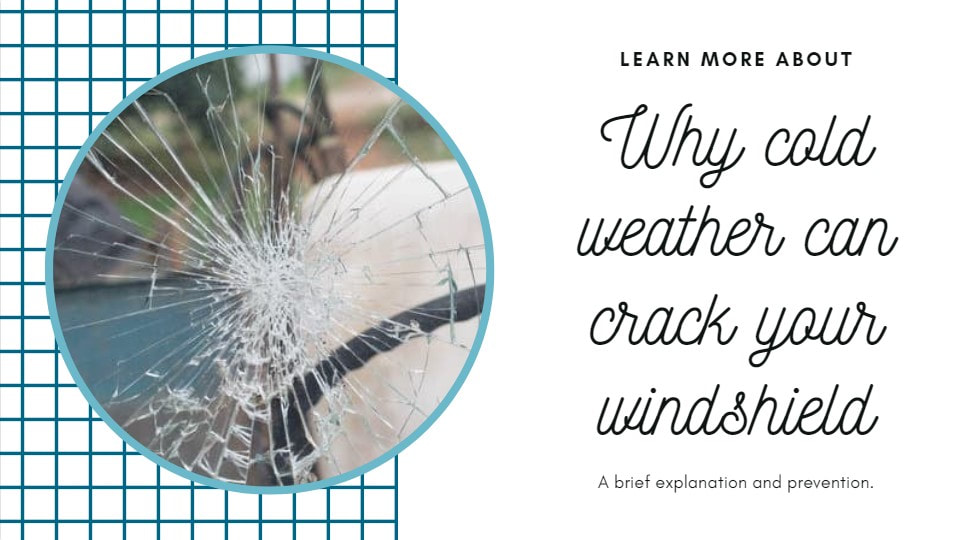 Normal temperature is best to maintain your windshield safety. Winter cold or red hot summer jeopardizes the integrity of your windshield making it prone to chips and cracks that may require global installation. Brace up, today we're facing cold weather… Let's face it, you won't see a windshield shattering in broad daylight because of extremely cold weather (won't happen in extremely hot weather either), rather, cold weather magnifies its spoil possibilities. Such as a chip that's overlooked in summer will escalate to major cracks in Winter due to the contracting effect of the cold. The best way to keep your classes safe is prevention and care. In this article, you'll discover why cold weather can crack your windshield and how to prevent it. Why Cold Weather Can Crack Your WindshieldCold weather is only a magnifying effect. Reasons why cold weather can crack your windshield depend on causing factors that include: #1. Ice: Ice collecting on your screen can crack your windshield in unthinkable ways. Its first attack is forming a frost mask over your windshield, where you'll be tempted to use an ice scraper; the best you attempt hot water to dissolve the ice but bruh, you're in all shades of wrong. Ice scrapers(especially metal) leave scratches and hot water causes sudden shifts in temperature and aggressive expansion both are a sure way to experience major cracks or shattered glass. #2. Road Salt: Road salts melt snow on the road, prevent drifting, and are harmful to your windshield. Road salt jumping on your windshield from oncoming vehicles can cause an immediate chip due to craters flying at full speed at varying ends. Road salt weakens the durability and integrity of your windshield when not whipped immediately, take note. #3. Hail: We know Winter to be hail-bound. Hail lands with just enough velocity to cause instant cracks or weak spots on your car's windshield. Either condition is perfect for the cold to contract the cracks in major damage. #4. Bad Wiper: Picture yourself wiping your face with sandpaper–ouch! That hurts right? Now, you're hurting your car windshield by wiping the glass with a roughened wiper. This leaves deep cut scratches that'll later turn into major cracks requiring that you spend for total replacement. #5. Frozen Wiper Fluid: Wiper fluids are ideal for more temperate weather because of is possible to freeze however, there are winter-friendly windshield wiper fluids. Using wiper fluids. that freezes easily results in localized stress on the windshield, which could turn into cracks over time. #6. Temperature Fluctuations: Cold temperature retracts; hot temperature expands; a sudden transition from one to the other poses a significant threat to the windshield which oftentimes leads to cracks on the screen that'll lead to other cracks. This threat level worsens if your windshield is already chipped–just expect nothing good now. How to Prevent Cold Weather from Cracking Your WindshieldNow we've uncovered the main cause of why cold weather can crack your windshield. How about you learn how to prevent it from happening until you don't?
—Here's how to prevent the worst from striking: #1. Ensure windshield wipers are good: You're already aware of the horrors of wiping your windshield with bad or roughened windshield wipers, it's similar to brushing over your face with sandpaper. You end up with a scratched screen that's prone to major cracks like your face ends up in a scar. Protip, replace your windscreen wipers once a year. #2. Hot water is a no-no: Say with me; "hot water expands–cold water retracts." Now you know. Awesome. A sudden change from one to the other put the windshield in an unsettling condition to crack waiting to get worse by the cold. Therefore, using hot water on the windshield to battle frost is a no-no, instead, turn on the car defrost system. #3. Park inside a garage: The best place to find your car is inside the garage. Garages regulate temperature and combat cold weather protecting the windshield from elements that may escalate windshield cracking. #4. Avoid door slamming: Years back, for the excitement of getting a brush from Daddy's Jetta, I slammed the boot so hard that the left brake light jumped off. Slamming the front door of your car causes a vibration that weakens the windshield for further elements to act on it. Be a gentleman and close with just enough pressure. Conclusion Car windshields are silent life savers, save it and they'll save you later. What I forgot to mention is that windshield covers are great at keeping the ice away, you deal with the frost later. If you must scrap, choose scrapers designed for windshields. Avoid using plasters and metal scraps they can wound your windshield so badly that the only solution is a replacement. The problem isn't just cutting costs and saving more, but also, it's saving your life. |
AuthorWrite something about yourself. No need to be fancy, just an overview. ArchivesCategories |
 RSS Feed